Creating Real Estate Solutions
Representative Projects
REPRESENTATIVE FINANCIAL PROJECTS
(Selected from lifetime project experience of Principals)
HOLISTIC APPROACH TO FINANCIAL MODELING
The model design approach combines training and experience in accounting with extensive broad based real estate experience to create financial models and analyses of projects, business plans, debt and equity requests, loan administration and other requirements.
Financial models are driven by an Assumptions table. Changes to an assumption automatically populate throughout the model and update the reports and metrics.
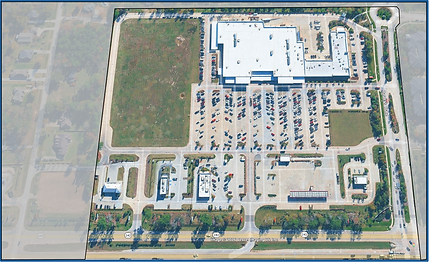
MULTI-LOCATION ROLLOUT FOR GROCER ANCHOR TENANT (Representative project depicted below)
Grocer
Store Fuel St Pads Retail Total
Land area (acres): 10.0 2.0 4.4 3.2 19.6
Building area (SF): 87,926 NA 10,564 26,498 124,988
-
The opportunity to participate in the grocer rollout was competitive both in financial terms and the speed at which sites were presented and terms negotiated. To maximize our ability to address these parameters, I created the following process.
-
Created unit cost data base for site development/utility infrastructure costs.
-
Designed/implemented mapping system that estimated unit counts for multiple sites.
-
Built financial model that incorporated the unit costs and mapped unit counts to allocate costs between landlord/developer and grocer tenant to guide lease and site development agreement negotiations. The financial model tracked 75 - 100 line items and computed the share of costs and MUD reimbursement across multiple components and allocated the net costs to the applicable parties.
-
Obtained buy-in from grocer tenant of the approach and resulting allocation of costs and responsibilities between landlord/developer and grocer tenant.
PUBLIC/PRIVATE PARTNERSHIP TO DEVELOP MIXED USE PROJECT
Subject Future Affordable
Project Retail Housing
Land area (acres) 1.673 1.463 2.726
Building area (SF) 5,200 10,350
Units 80
SUBJECT PROPERTY COMPONENTS:
Ownership and Financing
Public Private
5,200 SF Pavillon Building X
2,565 SF Seating Area
Public Restrooms
400 SF Meeting Room
519 SF Teaching Kitchen
2,412 SF Covered Patio
Outdoor Activity Area X
1,440 Covered Performance Area
6,260 Activity Area with Water Feature
9 Food/beverage Trailers X
Stationary with complete wet and dry utility hookups
Leased to private food operators
Full use of the Seating Area and Restrooms in the Pavillion
-
Redesigned the site plan to enhance synergy of components.
-
Renegotiated agreements between municipal development authority ("MDA") and private developer.
-
Built financial model to allocate costs between publicly and privately owned components. Model also provided componentized costs and income for each element of the privately owned component.
-
Model incorporated documentation and calculations of costs allocated to the multiple funding sources (state and local equity, private equity and private debt) together with draw requests to each of the multiple sources.
-
The componentized costs reports generated by the model were used to set rents for the tenants.
BUILT TO RENT SINGLE FAMILY SUBDIVISION PROJECT
Land area (acres): 131
Number of Lots: 759
Number of Phases: 10
Full cycle model scope: 1) land acquisition, 2) infrastructure/utility installation,
3) lot development,
4) home construction,
5) lease up of homes,
6) debt/equity financing,
7) project sale
8) return metrics
-
Created model that projected costs and rent income by phase over the entire project cycle from land acquisition to eventual sale of fully rented project.
-
Model designed to have changes in individual assumptions to generate fully automatic scenario planning alternatives in real time.
-
Implemented mapping system to estimate unit counts for each phase of the project.
-
Applied the unit counts by phase to the engineer's OPC to generate costs by phase.
-
Model provided componentized costs, income and return metrics for each phase and consolidated for the entire project.

